Note: this piece was originally written in December 2022.
I see in two dimensions. Due to a congenital (meaning “present at birth”) eye condition, I am blind in one eye. While this anatomical anomaly isn’t usually a hurdle to everyday living, it does mean that I lack depth perception. Binocular (two-eyed) vision creates depth perception, a sense which helps our brains to understand our spatial surroundings in 3D. Some people can get a sense of my 2D life by covering one eye and trying to go about their everyday tasks–it’s not always simple! Because my eyes can’t provide binocular information to create depth in my field of vision, I have to work a little harder to visually understand some shapes and forms. In museums, I usually manage this by literally looking very closely at pieces on display.
I didn’t think that my recent visit to a prominent museum in the United States would warrant much intervention by the security staff. To my surprise, I was doggedly followed by a number of security personnel, and individually reprimanded for standing too close to the artworks–even when accompanied by one of the museum’s curators (a friend of mine)! As a museum visitor, I want to understand the contours of oil paint on canvas, and the uneven topography of ancient ceramics. How can I accomplish this when, despite the museum itself offering no official policies on keeping a distance from its artworks, I am scolded by security staff for simply trying to experience their exhibits in a way that is accessible to me? My great crime, it would seem, was being visually impaired.
MEANINGFUL CHANGE IN MUSEUMS
Although museums have a history of excluding and ignoring the needs, experiences, and property of marginalized communities (do a quick search of “British Museum” to pull up numerous examples), museum professionals and scholars are working to address systems of institutionalized inequality in their practices and exhibitions.
The name of one movement dedicated to fostering equity in museum spaces, Museums Are Not Neutral, is itself an explanation for why it is imperative for museums to address social justice issues: museums are not neutral showcases to passively replicate institutionalized societal “norms” without commentary. Museums are (or should be) public-facing places of learning that are meant to teach visitors about the world around them. The privilege to choose which parts of the world are showcased and for whom they are accessibly displayed comes with the responsibility of understanding that “neutrality” in museums is impossible. At best, museums help to expose visitors to new, often underrepresented perspectives—at worst, museums reinforce historical hegemony and celebrate systemic violence.
Addressing systems of inequality in museums can look like arranging lectures on works by historically marginalized artists, or shifting hiring policies to reflect greater diversity in museum staff. Repatriating (formally returning) objects acquired by unethical means, such as the famous Benin Bronzes or the Parthenon Marbles, is another avenue to recognize and reconcile the institutional racism and colonialism engrained in the history of museums. However, the ways in which museums can address social inequality are not limited to those options.
One institution zealously exploring how issues of racism, colonialism, and gender bias have been hiding in their galleries is Harvard Art Museums (Massachusetts, USA). Their ReFrame Project has resulted in new gallery signage and several online lectures on the “difficult histories” of objects in their collections. Other institutions, like the Royal BC Museum (British Columbia, Canada), have stated their intention to completely overhaul their public gallery spaces to better represent an inclusive and reconciliatory approach to local history, albeit with limited success.

ACCESSIBLE MUSEUMS ARE EQUITABLE MUSEUMS
While these positive strides towards creating equity in cultural spaces are not to be diminished, social justice issues in the museum collections are only part of the puzzle. Equally important are the institutional barriers faced by museum visitors. My own experience of being denied the accommodation of close viewing is only one example of such issues of inequity–other persons with different physical or cognitive disabilities also face similar barriers of accessibility in museum settings.

Some galleries have subtly addressed issues of accessibility in special exhibitions. The Crawford Gallery (Cork, Ireland) is currently showing an exhibition by Irish artist Corban Walker, entitled As Far As I Can See. In addition to displaying Walker’s own sculpture and drawings, the exhibition includes a re-hanging of several gallery artworks at Walker’s sightline, corresponding to his approximately 4-foot-tall stature. These low-mounted works served the dual purpose of addressing the exhibition’s themes of scale and perspective, and making the artworks physically accessible to little people like Walker.
Other museums are using new technology to create tools, platforms, and events designed to offer disabled visitors virtual accommodations for interacting with their exhibits. Arches, a program funded by the European Union, is a group of six European museums committed to designing these kinds of accommodative digital materials under the guidance of over 200 disabled collaborators. The results of this project cover a range of products, including interactive museum guides, museum-specific apps and games, and accommodative technologies such as the Touch Tour playlist at the Victoria and Albert Museum (London, UK), a SoundCloud playlist of audio files describing different artworks in the museum that visitors are permitted to touch.
“FAKE” OBJECTS, REAL HISTORIES: COPIES IN MUSEUMS
While relying on the future’s technology to break down accessibility barriers is tempting, museums have long held a perfect tool for accessible gallery experiences at their disposal: copies and replicas of artworks and artifacts in their collections, and collections around the world.
Historically, museums fervently collected and traded plaster copies of objects found outside of their collections, and created their own plaster replicas for display. One such “copy shop”, the Gipsformerei of the Berlin State Museums, still produces traditional plaster replicas of museum objects for the discerning (and deep-pocketed!) buyer. And while many museums don’t advertise this fact, their storage cabinets are often peppered with similar object replicas made from plaster and other materials.
In a world obsessed with originality (think of the sensationalized swarm of NFTs making recent headlines), copies, replicas, and imitations of objects are often not seen as “real”. Studies in psychology have demonstrated that even simply wearing knockoff sunglasses can result in increased behaviours of dishonesty! In museums, staff are tasked with trying to balance a transparent presentation of these objects as replicas with the desire to maintain visitor interest in pieces that aren’t “real originals”.
It is no surprise that the philosophical and practical considerations surrounding museum copies are on the minds of modern scholars. A recent international, academic conference on Near Eastern archaeology held a session entitled Meaningful Copies: Virtues beyond Originality. As a museum educator and lover of copies, I was eager to participate and learn from fellow replica enthusiasts. Presentations surrounding conceptions of originality in ancient and historical cultures, case studies on the iconography of forgeries, and discussions on the meaning of materials intermingled to enrich our understanding of new possibilities for engaging with copies.

One of the most salient results of our discussion was the idea that replicas in museums could become more appealing and “authentic” to visitors through a process of activation. By touching, holding, or interacting with a copy in some way, a copy can transform from a “pale imitation” of the original into a vessel for experiencing the physical realm of the human past. This idea of activation mirrors the benefits of using museum copies for accessibility purposes: bringing replicas directly into the hands of museum visitors acts as an accommodation for connecting more deeply with the ancient people who crafted and used the original objects.
ACTIVATING ACCESSIBILITY WITH MUSEUM COPIES
To a disabled academic and occasional museum professional like me, the solution seems clear: most museums already have copies of their own objects. Why not bring these replicas out of storage (physically and metaphorically), and put them to work in service of creating a more accessible experience for all visitors?
While some copies may be expensive to produce and preserve, others can be made from stable, easily available materials like plastic. These copies carry much lower risk than their original cousins, and they can be taken out of their glass cases to bring the object within accessible visual distance of the visitor—and even touched or held. With the popularization of the 3D printer, making copies of museum objects is more accessible than ever before. Anyone with the skills and machinery could have their very own bust of Nefertiti in mere minutes!
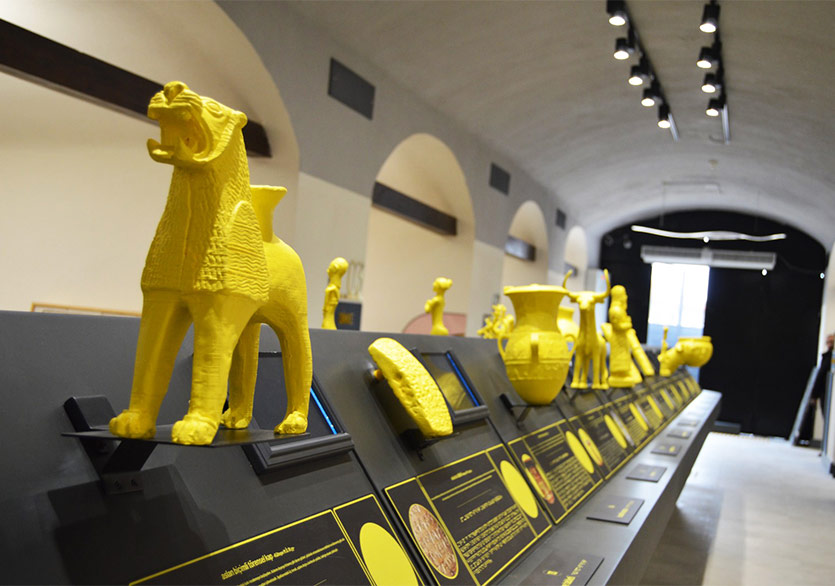
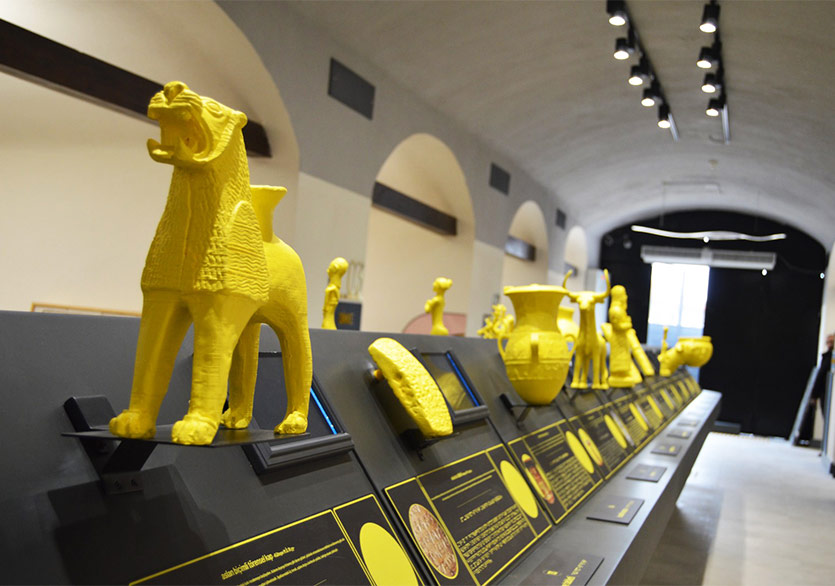
Institutions like the Museum of Anatolian Civilizations (Ankara, Turkey) have realized this potential and harnessed it, to create exhibits filled with high-contrast and easily visible 3D-printed copies for any visitor to view, examine, and touch.
Like I see in two dimensions, I occupy space in two parties involved in museum accessibility: people with disabilities, and people who work in the museum sphere. I have experienced the magic and connection found in holding an ancient ceramic vase, and touching the glass-smooth surface of prehistoric polished stone. It might not be possible to offer that magic to everyone–but by integrating museum copies into exhibits to design to create a more equitable visitor experience, we all get a little closer to better understanding our shared world.
 Hannah M. Herrick - Archaeologist